
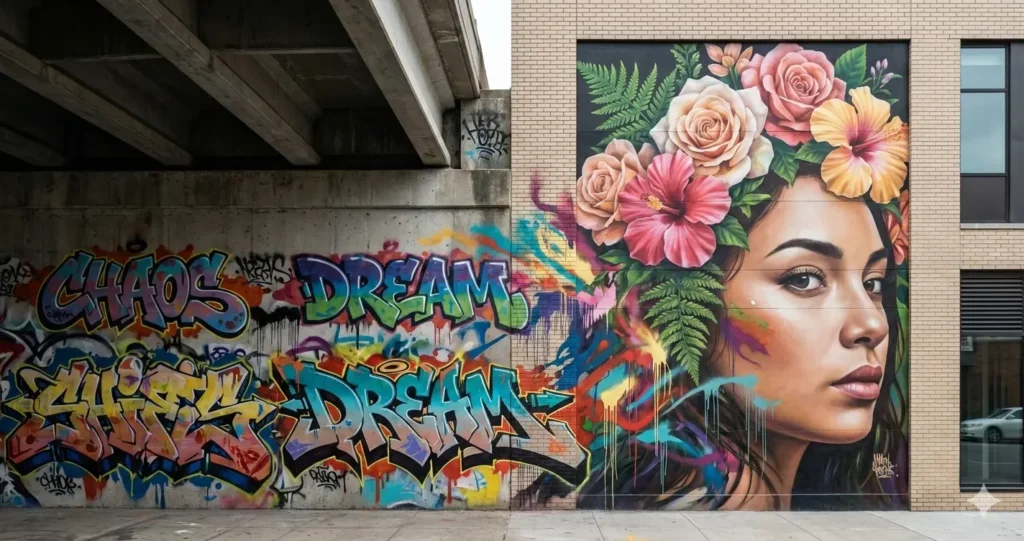
Walk down any major city block — New York, London, Berlin, São Paulo — and you’ll see it everywhere. Color exploding on concrete. Names sprayed in wild, unreadable letters. Massive photorealistic faces staring down from five-story walls.
Most people lump it all together and call it « graffiti. » Others say « street art. » And honestly? Even people deep in the culture argue about where one ends and the other begins.
So what’s the actual difference between graffiti vs street art? Is it intent? Legality? Skill level? The audience it’s made for?
The answer isn’t as clean as you might expect. But after spending years in this space — studying the styles, the history, and the culture behind every tag, throw-up, and mural — I can tell you there are real differences. And they matter.
Let’s break them down.
What Is Graffiti, Really?
Before we compare graffiti vs street art, we need to get clear on what each one actually is on its own. Because most people’s definitions are way too vague.
Graffiti, at its core, is writing. The word literally comes from the Italian graffito, meaning « a scratching. » And that scratching — that compulsion to leave your mark — goes back thousands of years. Ancient Romans scratched messages on the walls of Pompeii. Medieval travelers carved their names into church stones.
But the graffiti we’re talking about today — the spray-painted, marker-tagged, aerosol-fueled movement — was born in the late 1960s and early 1970s in Philadelphia and New York City. Writers like TAKI 183 and Cornbread didn’t set out to make « art » for galleries. They wanted to get their names up. Everywhere. On subway cars, on highway walls, on mailboxes — anywhere people would see it.
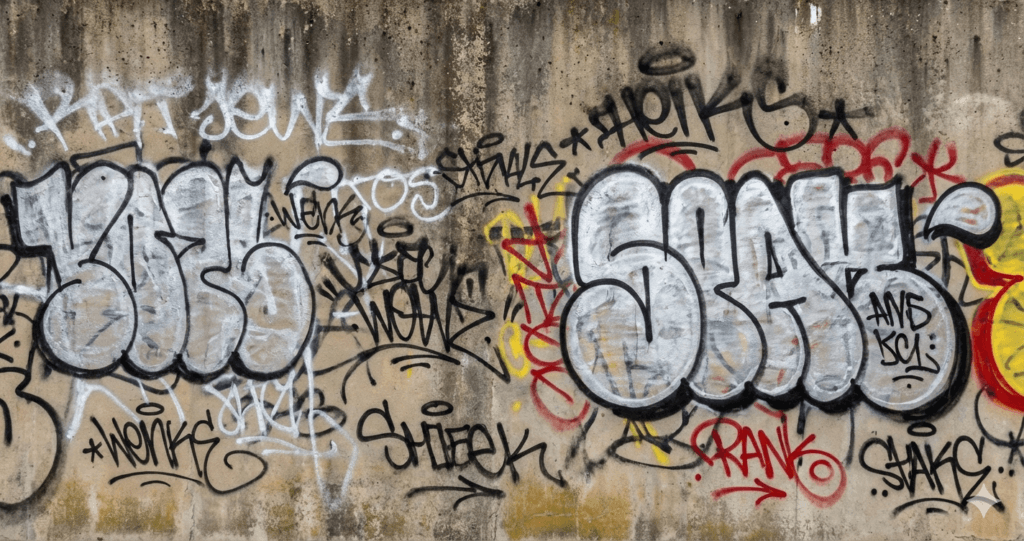
That’s the key thing to understand about graffiti: it’s name-based, writer-driven, and culture-specific. There’s a whole system behind it — tags, throw-ups, pieces, burners, wildstyle — and it all revolves around letter-forms and getting your name recognized by other writers.
If you’re just getting into this world, our Graffiti guide and Calligraffiti tutorial are good places to see how the lettering side works in practice.
What Is Street Art?
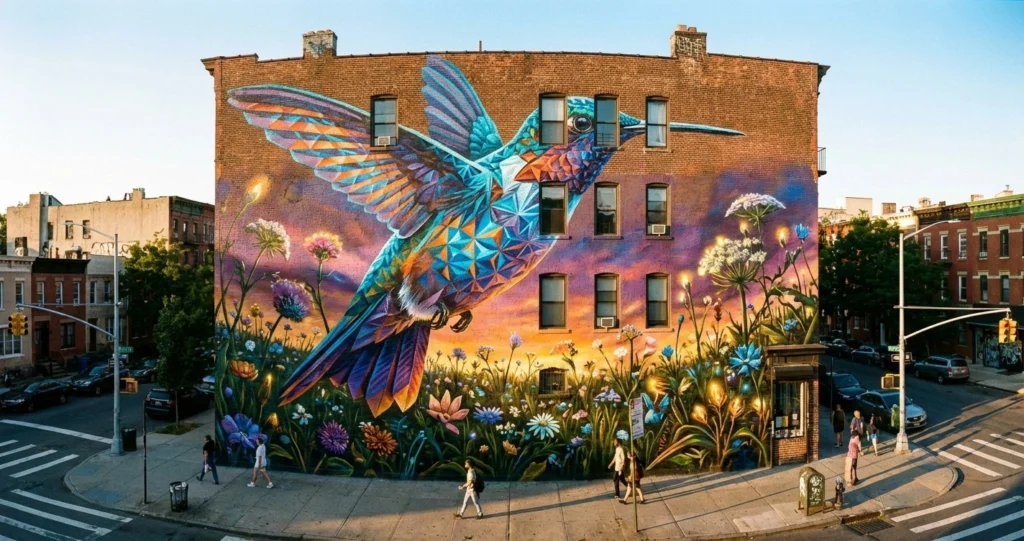
Street art is a much broader category. While graffiti is rooted in writing and lettering, street art is rooted in imagery, message, and public engagement.
Think murals. Think stencils. Think wheat-paste posters, mosaic tile installations, yarn bombing, and sculptural interventions. Street art borrows from illustration, graphic design, fine art, political cartooning, and pop culture — and it puts all of that directly into the public space.
Artists like Banksy, Shepard Fairey (of OBEY fame), Keith Haring, and Jean-Michel Basquiat helped bridge graffiti culture into the broader art world. Some of them started as graffiti writers. Some didn’t. But all of them made work that communicated something beyond a name.
That’s an important distinction. Street art is often made for the general public — it’s designed to be understood, to provoke emotion, to beautify, or to challenge. Graffiti, on the other hand, is primarily made for other writers. The audience is the culture itself.
According to Artsy’s 2025 Urban Art Report, urban-inspired artworks saw a 23% increase in global sales compared to the previous year — a sign that street art has firmly entered the mainstream art market. The global street art market is now valued at approximately $4.5 billion, fueled largely by works with graffiti origins.
7 Real Differences Between Graffiti and Street Art
Now that we’ve got the basics covered, let’s dig into the specific ways graffiti and street art differ. These aren’t arbitrary categories I made up — they come from real distinctions that artists, historians, and cultural critics have identified over decades.
1. Intent and Motivation
This is the biggest difference, and the one that everything else flows from.
Graffiti is driven by recognition within the culture. A writer’s goal is to get their name seen — by other writers, on as many surfaces as possible, in the most impressive style they can pull off. The motivation is reputation, style mastery, and presence. It’s an ego-driven art form, and that’s not an insult. That drive to « get up » is what pushes writers to develop increasingly complex lettering styles.
Street art is driven by communication with the public. The goal might be to make a political statement, beautify a neglected neighborhood, create a viral visual, or simply share beauty with strangers. The audience is everyone walking by — not just other artists.
2. Permission and Legality
Here’s where the graffiti vs street art debate gets especially heated.
Traditional graffiti is, by definition, unauthorized. That’s part of the point. The risk, the illegality, the adrenaline of painting in forbidden spaces — these things are central to graffiti culture. When U.S. cities collectively spend over $1.2 billion annually on graffiti removal, that tells you something about the tension between writers and authorities.
Street art exists on a spectrum. Some of it is just as illegal as graffiti — Banksy doesn’t exactly ask permission. But a huge portion of modern street art is commissioned, sanctioned, or at least tolerated. Cities around the world now actively commission murals as part of urban renewal programs. San Francisco’s StreetSmARTS program, for example, pays artists $50 per square foot to paint murals on frequently vandalized properties.
That doesn’t make commissioned street art « less valid. » But it does mean the relationship to authority is fundamentally different.
3. Medium and Tools
Graffiti writers are loyal to the aerosol can. Spray paint is the primary medium — along with markers, paint pens, and mops (homemade markers filled with ink). If you want to understand the tools, check out our essential graffiti supplies guide and our 2025 graffiti markers review.
Street artists use just about everything. Stencils and spray paint, yes. But also wheat paste, screen printing, mosaic tiles, LED lights, projection mapping, and even augmented reality. The medium is whatever serves the message. There’s no loyalty to a specific tool.
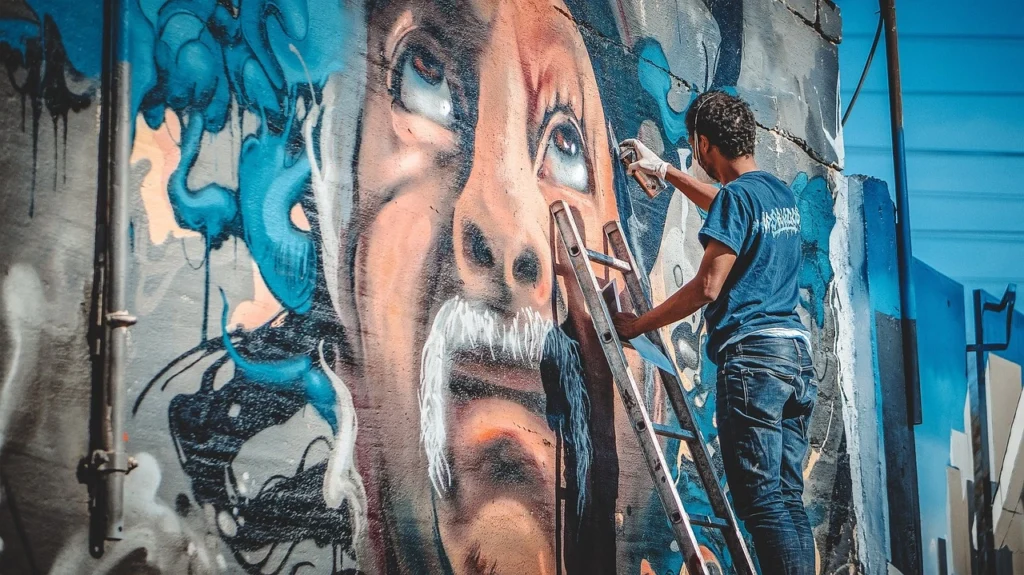
This is actually one of the easiest ways to tell the difference when you’re walking through a city. Spray paint on a wall with stylized letters? Probably graffiti. A wheat-pasted poster of a political figure? Street art. A massive painted portrait? Also street art.
4. Lettering vs. Imagery
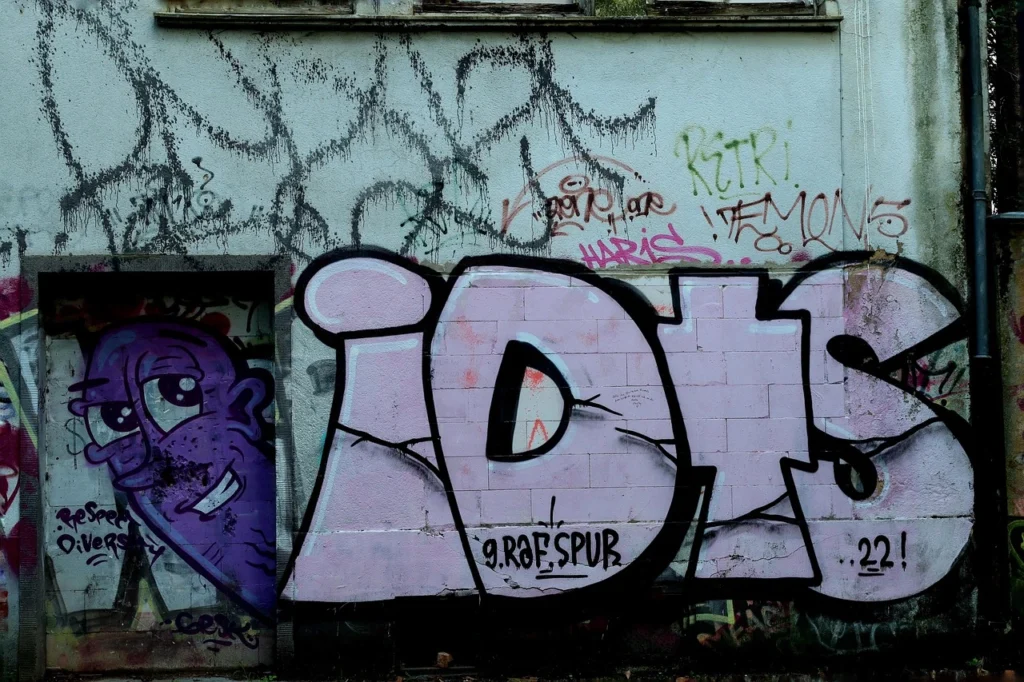
Graffiti is fundamentally about letters. Tags, throw-ups, pieces, wildstyle — it all centers on the alphabet. A graffiti writer’s entire identity is tied to how they manipulate letterforms. The name IS the art.
Street art is fundamentally about images. Portraits, symbols, characters, scenes, abstract compositions. There may be text involved, but it’s in service of a larger visual concept — not the other way around.
There are crossover moments, of course. Graffiti characters blur the line. Calligraffiti — the fusion of calligraphy and graffiti — blurs it even further. But the core DNA is different.
5. Audience and Community
Who is the work made for? This might be the most underrated difference in the graffiti vs street art conversation.
Graffiti is an insider culture. Writers paint for the respect and recognition of other writers. The average person walking by can’t read a wildstyle piece — and that’s by design. The complexity is a flex. Being « known » in graffiti means being known by other graffiti writers, not by the general public.
Street art is made for everyone. It’s designed to be accessible, readable, and emotionally impactful to any passerby. When the Museum of Graffiti in Miami curates exhibitions or when a massive mural goes viral on Instagram, that’s the street art ecosystem at work — broad reach, public engagement, cultural commentary.
This doesn’t make one « better » than the other. They just serve different purposes.
6. Relationship to the Art Market
Here’s where things have shifted dramatically in recent years.
Street art has been fully absorbed into the commercial art world. Banksy’s « Girl with Balloon » sold for $25.4 million at Sotheby’s. Works with documented street art origins now command 30–50% premiums over studio pieces by the same artist. Street art investment funds with multi-million dollar portfolios are emerging. Insurance companies are now covering graffiti works as fine art, not property damage.
Graffiti, by contrast, has a much more complicated relationship with money. Many graffiti purists see commercialization as a betrayal of the culture. Selling a tag? Putting a throw-up on a canvas for a gallery? That can get you labeled a sellout. Some writers navigate this tension successfully. Others refuse to engage with the market at all.
A Hiscox survey found that 65% of millennials view graffiti as legitimate art — but that acceptance hasn’t fully translated into market value the way it has for street art. The word « street art » is simply more palatable to collectors, galleries, and institutions.
7. Ephemerality and Preservation
Both graffiti and street art are impermanent by nature. A painted wall can be buffed, painted over, or demolished at any time. But the attitude toward that impermanence is different.
Graffiti writers embrace ephemerality. Getting buffed is part of the cycle. You paint, it gets covered, you paint again. The act of painting matters as much as the finished piece. Documentation happens through photos and videos, but the physical work is expected to disappear.
Street artists increasingly fight against ephemerality. Communities petition to save murals. Cities grant landmark status to significant works. And new technologies — like 3D scanning and augmented reality — are being used to preserve street art digitally. In Melbourne, Australia, a « Virtual Street Art Walk » uses AR to overlay lost murals in areas where the original works were removed or destroyed.
Our article on eco-friendly street art explores some of these preservation and sustainability trends in more detail.
The Gray Area: Where Graffiti and Street Art Overlap
If you’ve read this far, you might be thinking: « OK, but what about artists who do both? »
Great question. Because the line between graffiti and street art isn’t a wall — it’s more like a gradient.
Consider someone like Lady Pink. She came up as a graffiti writer in the 1980s New York subway era and was one of the first women to gain recognition in a male-dominated scene. Today, she creates large-scale murals, teaches at universities, and exhibits in galleries. Is she a graffiti writer or a street artist? Both. The answer changes depending on which piece you’re looking at.
Or take SEEN, often called « the Godfather of Graffiti. » He started painting subway trains in the 1970s. Decades later, his work hangs in fine art galleries. His medium evolved, but his roots are pure graffiti.
The overlap is getting even blurrier in 2026. Writers are using digital tools, collaborating with brands, and painting legal walls at festivals like Paint Louis (which drew 400–500 artists in 2025). Meanwhile, street artists are learning letter styles and incorporating graffiti elements into their murals.
The culture is evolving. And that’s exactly what keeps it alive.
Why Does the Difference Matter?
You might wonder if any of this really matters. Can’t we just appreciate all of it?
Sure — and you should. But understanding the difference between graffiti and street art matters for a few important reasons.
For artists: Knowing where you stand in the culture helps you find your community, understand the unwritten rules, and develop your practice with intention. If you’re learning to draw graffiti letters, you’re entering one tradition. If you’re painting large-scale murals, you’re entering another. Both are valid, but the expectations, aesthetics, and culture around them are different.
For cities and property owners: Understanding the distinction helps inform better policy. A city that treats all spray-painted marks as vandalism misses the cultural significance of graffiti — and a city that commissions generic murals while criminalizing authentic graffiti creates a frustrating double standard.
For collectors and art lovers: The distinction affects market value, provenance, and authenticity. As the street art market continues its explosive growth, knowing what you’re looking at — and what cultural world it comes from — makes you a smarter, more respectful collector.
For anyone who’s curious: Culture is richer when we pay attention to its nuances. Calling everything « graffiti » is like calling every song « rock music. » The details matter, and they make the experience more rewarding.
So, Graffiti vs Street Art — Which Is « Better »?
Neither. Both. Depending on who you ask.
Graffiti is raw, rebellious, insider-coded, and uncompromising. Street art is accessible, communicative, visually diverse, and increasingly mainstream. They share DNA — and they push each other forward.
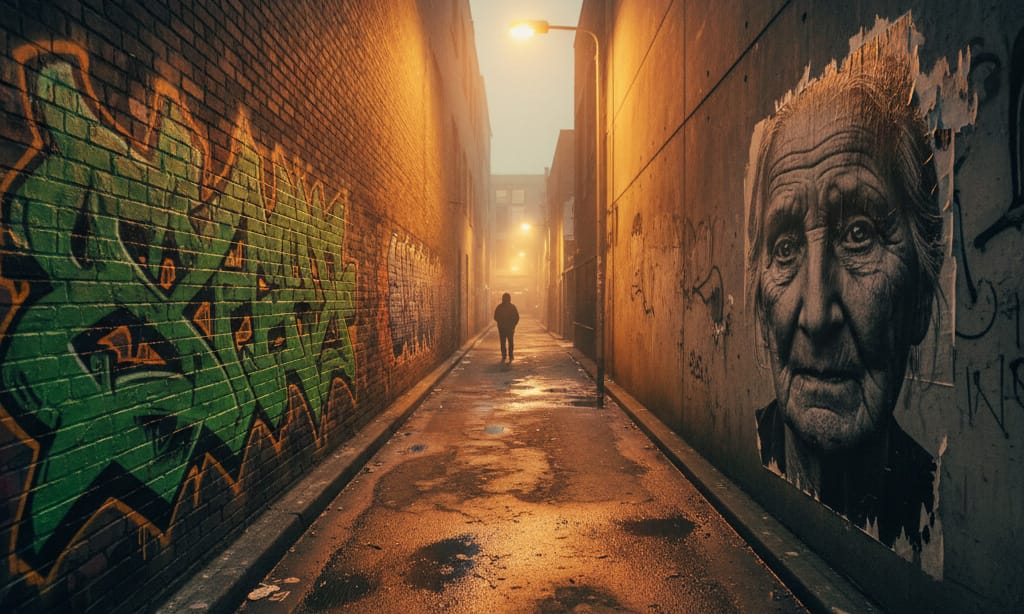
The beauty of walking through a city in 2026 is that you get to experience both. The tag on a mailbox and the mural on a five-story building. The hand-scrawled throw-up under a bridge and the stenciled political statement on a telephone booth. They’re all part of the same living, breathing conversation between people and public space.
And honestly? The fact that the debate still rages — that writers and artists still passionately argue about what counts as « real » — is proof that the culture is alive and well.
If you’re feeling inspired to dive deeper, here are some good next steps:
- Learn the different graffiti styles and what makes each one unique
- Check out our guide to graffiti supplies if you want to start creating
- Read the Graffiti Lettering Workbook review for a structured way to practice
- Explore our tutorials section for hands-on step-by-step guides
FAQ :
What is the main difference between graffiti and street art?
Graffiti is letter-based, writer-driven, and typically unauthorized. It’s made primarily for the recognition of other graffiti writers. Street art is image-based, made for public engagement, and is often commissioned or tolerated by property owners and cities. They share cultural roots but differ in intent, audience, medium, and relationship to authority.
Is graffiti considered art?
65% of millennials view graffiti as legitimate art, and the global street art market — fueled heavily by graffiti origins — is valued at $4.5 billion. While graffiti is still legally classified as vandalism in most jurisdictions, its cultural and artistic significance is increasingly recognized by museums, collectors, and academic institutions worldwide.
Can street art be illegal?
Yes. While a large portion of modern street art is commissioned or authorized, plenty of street artists — including Banksy — work without permission. The legality depends on whether the property owner or local government authorized the work, not on the style or quality of the piece itself.
Who are the most famous graffiti and street art artists?
On the graffiti side, foundational figures include TAKI 183, Cornbread, Lady Pink, SEEN, and Futura. On the street art side, Banksy, Shepard Fairey, Keith Haring, Jean-Michel Basquiat, and JR are among the most recognized. Many artists, like Basquiat, started in graffiti before crossing into the broader art world.